
Views: 0 Author: Site Editor Publish Time: 2026-10-14 Origin: Site


Picture this. You are two hours into a grueling half-day strategy session. The presentation on the screen is compelling. Yet, half the room constantly shifts, desperately trying to find a comfortable position. Hard, unyielding chairs destroy focus. They drain team productivity entirely. Ultimately, physical discomfort ruins even the best business presentations.
Investing in commercial furniture is not merely an aesthetic choice. It is a direct investment in human capital and event success. To keep attendees engaged, you need a proper conference hall cushioned seat that prioritizes wellness and anatomical support. Facility managers and B2B buyers will learn exactly what specifications to look for before executing a bulk purchase.
Ergonomics are Non-Negotiable: A quality meeting chair must offer dynamic lumbar support and a waterfall edge to prevent physical fatigue during extended sessions.
Material Dictates Lifespan: Commercial-grade, high-density injection-molded foam paired with highly abrasion-resistant upholstery ensures structural integrity over years of heavy use.
Flexibility is Key: For multi-purpose rooms, opting for a stackable design allows for efficient storage without sacrificing participant comfort.
Context Matters: Facility managers must understand the distinct functional differences between highly adjustable task chairs, fixed layouts, and universal meeting seating.
Procuring seating for boardrooms or presentation halls requires a clear understanding of its return on investment. The physical comfort of your attendees directly impacts the overall success of the event. It influences everything from information retention to executive mood.
During meetings that exceed two hours, the human body undergoes significant physiological stress. Prolonged sitting on inadequate surfaces leads to reduced blood circulation in the lower extremities. It also increases compression on the spinal discs. A scientifically designed chair mitigates these issues by evenly distributing body weight and reducing pressure points. Lacking proper structural support forces users to slouch. Consequently, lumbar disc pressure spikes by nearly 40 percent. Over time, this guarantees chronic back pain.
Physical discomfort creates a persistent cognitive distraction. Attendees constantly shift in their chairs to relieve pressure. Their focus drifts away from the presentation and toward their own fatigue. Providing a supportive, high-quality seat eliminates this distraction of discomfort. By keeping participants physically comfortable, organizations maintain higher levels of engagement. Furthermore, they improve information retention and facilitate faster decision-making.
The physical environment of a meeting space serves as a silent ambassador for your organization. Hosting prospective clients, board members, or industry partners demands pristine hospitality. The quality of your furniture reflects your brand attention to detail. Substandard seating inadvertently signals a lack of investment in guest comfort. Conversely, premium seating establishes an immediate tone of professionalism, respect, and authority.
Looking at recent market shifts, the commercial furniture sector has moved away from rigid, purely utilitarian designs. Today facility managers face a new mandate. They must create environments that rival the comfort of home offices while withstanding heavy commercial use. This resimercial trend dominates current procurement strategies. Businesses now prioritize modularity and advanced ergonomics over basic seating capacity.
Sustainability plays a massive role in modern purchasing decisions. Buyers actively seek chairs manufactured with recyclable aluminum bases and low-VOC emission foams. This shift reflects a broader corporate commitment to employee wellness and environmental responsibility. Upgrading meeting spaces is no longer just about filling a room. It is about engineering a collaborative ecosystem.
When evaluating seating options for extended use, aesthetics must follow function. Buyers should prioritize specific anatomical support features that align with BIFMA commercial ergonomic standards rather than just visual appeal.
Lower back support remains the most critical feature for meetings lasting longer than two hours. The human spine features a natural inward curve at the lower back, known as the lordotic curve. A high-tier chair incorporates a backrest that naturally contours to this spine shape. It prevents the lower back from flattening out. Building on this concept, dynamic lumbar support goes a step further. It flexes slightly with user movements. This ensures continuous contact and support as attendees lean forward to take notes or recline to listen to a speaker.
A proper conference seating arrangement must accommodate a diverse range of body types. Industry standards demand a seat width of at least 19 to 20 inches to provide adequate space. Seat depth is equally crucial. If a seat extends too far, shorter users cannot utilize the backrest without cutting off circulation behind their knees. Ideally, a clearance of about two to three inches between the front edge of the seat and the back of the knees maintains healthy blood flow.
A waterfall seat edge is characterized by a gradual, downward curve at the front of the cushion. This specific design element reduces pressure on the popliteal artery and veins located behind the knees. Alleviating this localized pressure promotes healthy venous return to the lower legs. It significantly reduces the risk of numbness, swelling, and deep vein thrombosis during all-day collaborative sessions.
Choosing between armrests and armless designs depends heavily on the primary function of the room. Armrests provide essential support for the neck and shoulders. They reduce upper body fatigue during long listening sessions. However, they must be measured carefully to ensure they do not collide with the underside of the table. In contrast, armless chairs offer maximum space efficiency. They allow users to slide completely under the table. This makes them ideal for high-density training rooms or interactive workshops where mobility is prioritized.
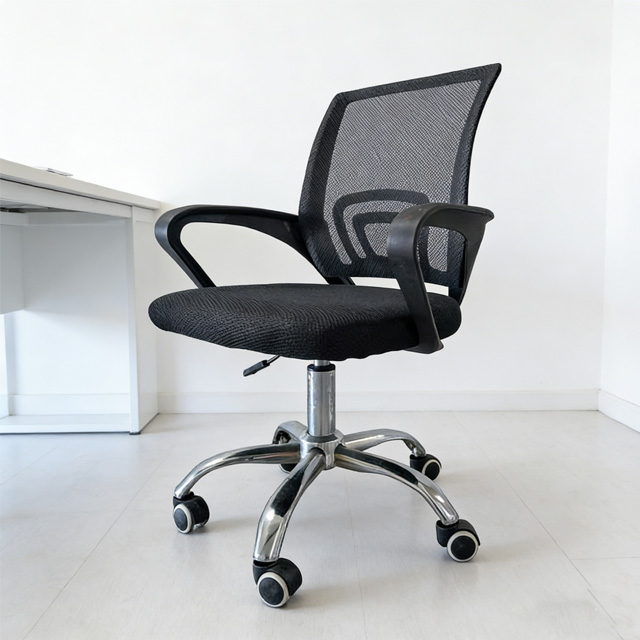
The internal architecture and external covering of a chair dictate its lifespan. B2B buyers must look beyond the surface to evaluate the industrial specifications of the materials used.
Modern facility managers increasingly reject low-density foams that require replacement every two years. Instead, there is a strong demand for injection-molded polyurethane and breathable performance fabrics. These materials align with long-term environmental, social, and governance goals and lifecycle sustainability.
The core of any reliable seat is its foam. Low-density foam feels plush initially. However, it quickly compresses, bottoms out, and permanently loses its shape after a few months of commercial use. For a high-traffic environment, high-density, injection-molded polyurethane foam is mandatory. Look for a density rating of 45 to 50 kilograms per cubic meter. This material provides firm, resilient support that rebounds to its original shape immediately after use. It ensures consistent comfort for a decade or more.
The external material must balance aesthetics, breathability, and maintenance requirements. Each material serves a distinct purpose depending on the environment.
Upholstery Type | Key Advantages | Primary Limitations | Best Use Case |
|---|---|---|---|
Commercial Fabric | Highly cost-effective, vast color options, excellent acoustic absorption. | Susceptible to stains if not treated with specialized fabric protectors. | Large training rooms, general conference areas. |
Leather / Faux Leather | Premium executive aesthetic, extremely easy to wipe down and sanitize. | Retains heat, offering lower breathability during long meetings. | Executive boardrooms, VIP meeting spaces. |
Mesh Backs with Cushioned Seats | Ultimate hybrid design featuring maximum back breathability with bottom comfort. | Mesh can stretch over time if not woven with commercial-grade tension. | Modern collaborative spaces, all-day seminars. |
Buyers should verify that any fabric chosen passes commercial abrasion tests like the Martindale or Wyzenbeek tests. Aim for a minimum of 50,000 double rubs. This ensures longevity in high-traffic environments.
Selecting the right furniture requires a deep understanding of the spatial dynamics and the intended capacity of the specific room. A chair working perfectly in an intimate boardroom will likely fail in a massive training center.
Seating requirements change drastically based on the room function. A traditional executive boardroom typically accommodates 10 to 20 people. It prioritizes spacious, high-backed chairs equipped with Class 4 gas lifts for smooth height adjustment. In contrast, a training room designed for 50 or more participants requires a compact footprint. Training room chairs feature lower backs and slimmer profiles. This maximizes the number of attendees without making the room feel claustrophobic.
For large-scale presentation halls, freestanding chairs create safety hazards and chaotic layouts. In spaces accommodating hundreds of guests, fixed auditorium seating with fold-down tablet arms offers a highly appropriate, code-compliant solution. Fixed seating ensures clear egress routes. It maintains precise sightlines to the speaker. Furthermore, it entirely eliminates the daily labor required to realign freestanding chairs after an event.
Facility managers must calculate spatial allowances accurately to avoid cramped conditions. A standard rule of thumb allocates 30 to 40 square feet per person in a boardroom setting. This accounts for the table, the chair, and the navigation space behind the seated individual. When placing chairs side-by-side without a table, leave a minimum of 24 inches of lateral space per chair to prevent guests from bumping elbows.
When facility managers and office designers plan for multi-purpose rooms, flexibility becomes just as critical as ergonomics. A room hosting a board meeting on Tuesday might need clearing for an open networking event on Wednesday. This is exactly where a stackable chair with curved seat proves its operational value. However, the commercial furniture market is flooded with temporary seating solutions sacrificing human comfort for storage convenience. To ensure attendees remain focused, specific structural features must be prioritized.
A flat seat pan is the primary cause of lower body numbness during extended meetings. A scientifically designed stackable chair features a subtle contour mimicking the natural shape of the human pelvis. This depression distributes body weight evenly across the gluteal muscles and thighs. It prevents pressure points from forming at the base of the spine. Additionally, this curved design allows the chairs to nest tightly together. It significantly reduces the vertical height of a stacked column in the storage closet.
High-density storage should not require excessive physical exertion from your facility maintenance team. Premium stackable chairs utilize lightweight yet structurally rigid frames. They typically feature 1.5mm tubular steel or aircraft-grade aluminum. Examine the stacking bumpers carefully. These small, integrated guards prevent the metal legs from scratching the frame or tearing the upholstery of the chair stacked below it. Consider the availability of custom chair dollies designed specifically for the chair footprint. This allows staff to move stacks of 10 to 15 chairs safely and efficiently.
A persistent misconception in procurement assumes stackable seating is inherently rigid and uncomfortable. Modern commercial engineering has completely resolved this issue. Even in a stackable profile, the foam should measure at least two inches thick and possess a high density. This ensures the cushion compresses enough to provide immediate comfort. Yet, it possesses the structural integrity to prevent the user from feeling the hard seat pan underneath, even after four continuous hours of sitting.
A common error made during office procurement is assuming any comfortable chair works in a meeting room environment. Buyers frequently confuse the standard office chair with dedicated meeting room seating. This leads to purchasing decisions negatively impacting both the budget and the workspace aesthetic.
A traditional task chair is engineered for a single, dedicated user occupying it for eight or more hours a day. Because human bodies vary significantly in height, weight, and posture, these chairs feature highly complex, customizable mechanisms. Users adjust seat depth, lumbar height, 3D armrests, and tilt tension to fit exact anatomical requirements. While this micro-adjustability is perfect for a personal workstation, it becomes a distinct liability in a shared meeting space.
In stark contrast, dedicated meeting chairs accommodate multiple different users throughout a single day with minimal to no adjustment required. When an executive or a prospective client walks into a meeting room, they do not want to spend five minutes deciphering levers and knobs to find a comfortable sitting position. These chairs utilize intuitive, weight-activated mechanisms. They automatically adjust the recline tension based on user body weight. The design remains intentionally streamlined and universally supportive.
Placing complex task chairs around a boardroom table often results in a chaotic visual environment. Because every user leaves the chair at a different height and tilt angle, the room looks perpetually disorganized. More importantly, the complex mechanisms of a standard task chair are prone to damage in high-turnover environments. Unfamiliar users frequently force levers or lean heavily on adjustable armrests, leading to mechanical failures. By investing in streamlined, purpose-built furniture, facility managers significantly reduce maintenance costs and maintain a clean, professional aesthetic.
Procuring furniture for a large-scale venue, training center, or corporate headquarters is a massive capital expenditure. Buying commercial seating in bulk requires a structured, data-driven approach to mitigate financial risk and ensure long-term satisfaction.
Before evaluating specific chair models, define the operational parameters of your space. Calculate the maximum occupancy of your room based on local fire codes and standard ergonomic spacing. If outfitting a large-scale presentation space where attendees face a single direction, decide between freestanding chairs and fixed, tiered seating. Fixed seating maximizes capacity and ensures perfect sightlines. However, it eliminates the possibility of reconfiguring the room for collaborative workshops.
Never purchase 100 chairs based solely on a digital catalog or a specification sheet. Human comfort is highly subjective. What looks supportive on a screen may feel completely different in reality. Require shortlisted vendors to provide physical sample units. Conduct a sit test with a diverse group of employees representing different heights and body types. Have them sit in the chairs for at least 45 minutes to accurately gauge cushion performance and lumbar support effectiveness before making a final selection.
Commercial environments subject furniture to rigorous wear and tear. A chair intended for a corporate environment must meet or exceed strict BIFMA industry standards. Ensure the chairs are rated for a dynamic weight capacity of a minimum of 300 pounds. Verify the seat cushion utilizes high-density foam rather than standard cut block foam. Furthermore, a reliable B2B manufacturer backs their product with a substantial warranty. Look for at least a 5-year warranty on the structural frame and mechanisms, and a 3-year warranty on the foam and upholstery.
The logistics of receiving and installing bulk furniture can be as complex as the selection process itself. When evaluating vendors, inquire about their supply chain stability. Ask for precise lead times, especially if ordering custom upholstery colors to match corporate branding. Clarify the delivery terms. Do the chairs arrive knocked down, requiring hours of manual assembly by your staff, or does the vendor provide a turnkey installation service? Partnering with an experienced commercial vendor minimizes operational downtime and ensures the project stays on schedule.
Choosing the right seating for your meeting spaces is a critical operational decision. The physical environment directly influences how teams collaborate, how long they maintain focus, and how clients perceive your brand. By prioritizing high-density foam, ergonomic curves, and durable upholstery, you protect attendees from the distraction of physical discomfort.
Whether you need the executive presence of a high-backed leather chair or the versatile efficiency of a stackable design, always align your choice with the primary function of the room. To transform your grueling long meetings into productive, engaging, and successful collaborative sessions, explore the premium, commercial-grade solutions available at Wangli Edu. Visit their official website to discover seating configurations engineered for ultimate durability and anatomical support, ensuring your next major procurement project is a resounding success.
When sourced from a reputable commercial manufacturer, a high-quality chair engineered with high-density polyurethane foam and a steel or aluminum frame maintains its structural integrity and comfort for 7 to 10 years, even under daily operational use. Proper maintenance and routine cleaning of the upholstery further extend this lifespan.
Fixed auditorium furniture is specifically engineered for large-scale presentation spaces, lecture halls, and theaters where the audience faces a single focal point. For a standard collaborative conference room, this type of fixed furniture restricts movement and prevents eye contact during group discussions. Freestanding or stackable seating is highly recommended for meeting rooms to maintain dynamic flexibility.
The industry standard for commercial environments is injection-molded, high-density polyurethane foam. Unlike standard cut block foam containing air pockets that collapse over time, high-density foam retains its shape and prevents bottoming out. This material provides consistent, firm support crucial for maintaining proper pelvic alignment during meetings lasting four hours or longer.
Yes, provided you select a model specifically designed for extended use. You must choose a chair with curved seat architecture and adequate cushioning measuring at least two inches thick. Modern commercial stackable chairs successfully bridge the gap between temporary storage needs and long-term ergonomic comfort, making them perfectly suitable for all-day training sessions and conferences.
The ideal seat height typically ranges from 16 to 21 inches off the floor. This range allows most users to rest their feet flat on the ground with their knees bent at a 90-degree angle. For shared meeting spaces, chairs with a simple pneumatic height adjustment lever accommodate the widest variety of user heights.
The necessity of wheels, or casters, depends on the room layout. In active collaborative spaces or boardrooms where users frequently turn to view screens or converse with different team members, casters provide essential mobility. Conversely, in dense training rooms or seminar setups where movement is limited, stationary glides or sled bases offer better stability and keep the room looking orderly.


